



Table of Contents Show
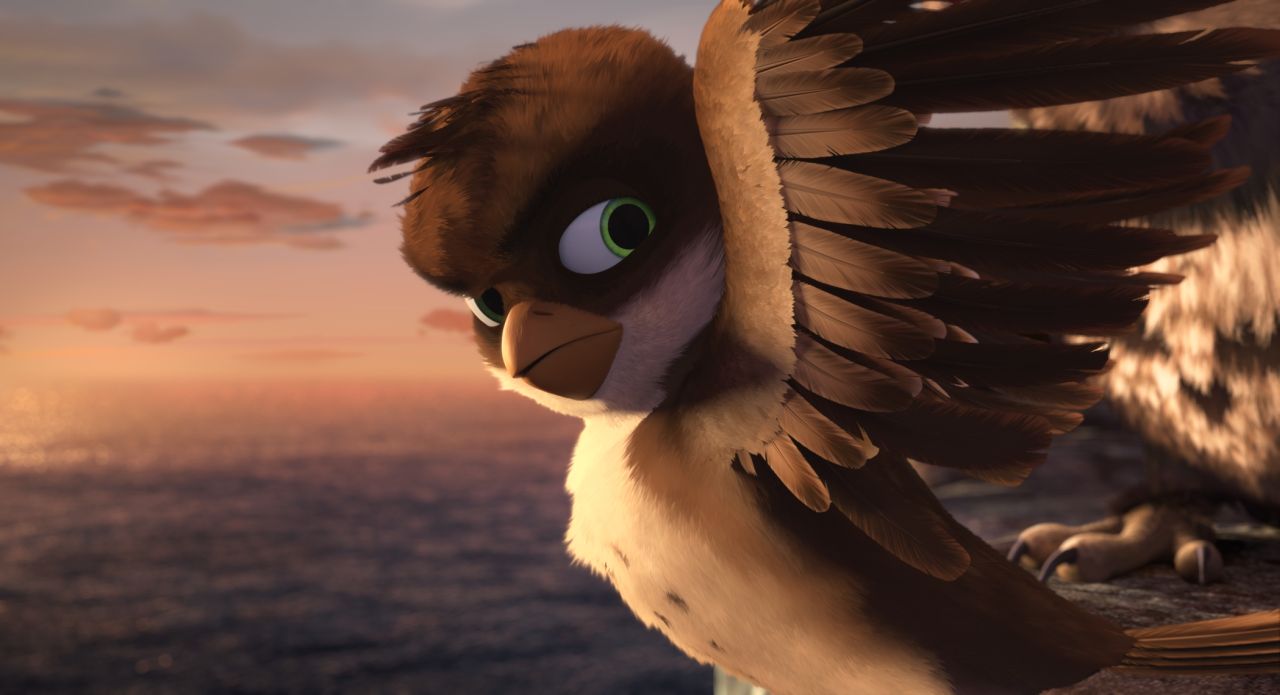
“Überflieger – kleine Vögel, großes Geklapper” – or more simply “Richard the Stork” in the English original – is an animated film for children that was created as a European co-production. The film was released in cinemas in Germany on 11 May 2O17. If you haven’t seen the film yet, you should read the article with caution, as some story details have already been revealed. Many companies were involved, which sounds like a big challenge. In fact, a pipeline had to be developed that worked for all of them. Each company had its own special tasks and a lot of data had to be exchanged back and forth. This article provides an overview of the variety of tasks involved and the hurdles that had to be overcome.
The various tasks for “Richard the Stork” were spread across several companies: Studio Rakete in Hamburg and Studio 352 in Luxembourg created the storyboard, for example. Studio Rakete was also responsible for the design of the main characters and Studio 352 for the supporting characters. A large part of the character animation was mainly split between these two companies and BUG in Norway. The lighting/shading, FX simulations and compositing of the final images were handled by Walking the Dog in Belgium and Rise | Visual Effects Studios in Germany. Rise realised the majority of the FX simulations and about the last third of the film with lighting/shading and compositing. This involved almost 400 shots.
Data exchange
As each of the VFX houses involved uses different software and has its own pipeline, a solution had to be found as to how each could read the other’s data. Unfortunately, this was not entirely convenient, as the programmes used simply interpreted the various file formats too differently. For the entire FX pipeline, with Houdini for Rise and Modo for Walking the Dog, the Alembic file format was used for rigid bodies, particle and water simulations. All types of volumes such as smoke, dust etc. were exported in VDB format. It turned out that Modo could only render this data correctly if the density of the simulations was between 0 and 1.
Another difference between Houdini’s and Modo’s import and export functions was that both programmes interpreted the default settings of the respective file types differently, e.g. for motion blur and volume density. For this reason, the Rise artists always rendered a preview QuickTime as a reference, which was sent together with the simulation data. This meant that the Walking the Dog team knew what the final result would look like in Modo and whether certain settings needed to be changed. To enable Rise to finalise their shots, the artists received the assets including UVs, textures and a text file containing which asset was needed for which scene, how often and in which position. Using this file, a script from FX supervisor Simon Ohler was used to automatically position all the required assets in the respective scene. To keep the scenes as performant as possible, only instances of the assets were used after a certain repetition. A similar procedure was followed with the supplied characters. Occasionally, however, the artists had to assign the appropriate textures by hand if the names and UVs were not correct.
We continue on page 2 with the FX simulation of the clouds, water and destructions
